
Panel Summary: "Financial Accountability and Community Voices in Asia’s Cross-border Energy Transition"
The accelerating momentum of financing Asia’s energy transition risks leaving a trail of adverse social and environmental impacts, according to expert perspectives shared at a multi-stakeholder session during the inaugural Bangkok Climate Action Week (BKKCAW). The central challenge is that large-scale, cross-border projects—from hydropower dams in the Mekong River Basin to emerging transition mineral mines—are consistently linked to the violation of international standards. Financial institutions (FIs) supporting these projects must now choose how to apply their voluntary commitments and address loopholes in new 'green' taxonomies.
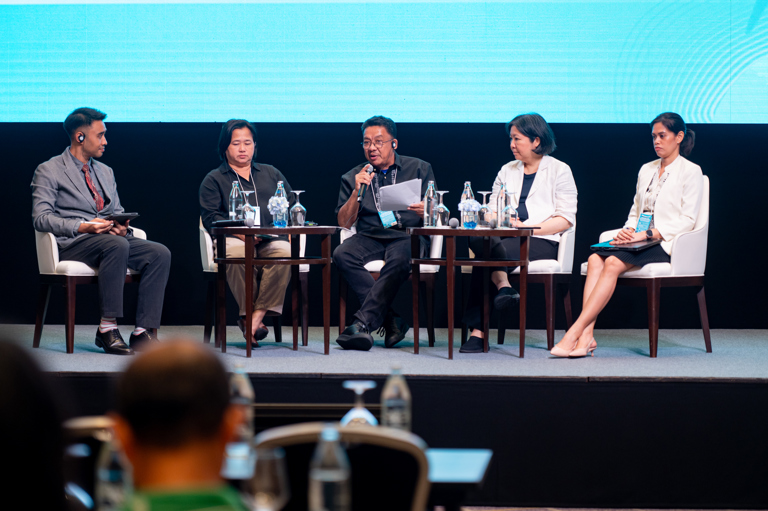
The session, Financial Accountability and Community Voices in Asia’s Cross-Border Energy Transition, highlighted the need to anchor climate finance in justice, independent verification, and community consent. Experts and community representatives made it clear: without mandatory regulation, accountability remains an illusion, leaving communities to shoulder the cost of climate action.
Watch the recorded seminar
The True Cost of 'Clean Energy' in the Mekong River Basin
For communities along the Mekong river, the consequences of unjust energy development are not theoretical. Piyanan Jitjang, Representative, Rak Chiang Khong Conservation Group shared devastating testimonies of how dam constructions have caused severe environmental and social damage, including altered water flow, chronic flooding, inundation, and the accumulation of toxic substances.
This crisis is compounded by the climate crisis itself. The session highlighted that the term 'clean' is not automatically synonymous with 'just.' Even if an energy project meets technical low-carbon criteria, like Mekong hydropower, it can still deepen climate risks and inflict severe harm on river-dependent communities, creating overlapping environmental and social risks for those who rely on the river's ecosystem for survival.
“The displacement and loss of livelihood disproportionately affect vulnerable community members, particularly women, leading to increased poverty and mental health stress,” noted Piyanan, underscoring that the finance model is currently transferring risk directly from investors to communities.

Safeguard Gaps: When Going 'Green' Invites Greenwashing
Findings shared by Fair Finance Thailand (FFT) and Fair Finance Asia (FFA) highlighted widespread safeguard failures in high-risk sectors, from large infrastructure to transition mineral extraction. Specifically, analysis of bank practices demonstrated that adherence to social and environmental due diligence commitments—whether referencing the broad UN Guiding Principles on Business and Human Rights (UNGPs) used by many Asian FIs or high-level frameworks like the Equator Principles (EPs) —is often insufficient. This lack of adherence results in the financing of projects with catastrophic environmental losses and significant human rights violations.
A major concern raised was the potential for greenwashing through emerging taxonomies. To understand the stakes, the discussion provided clarification on the regional mechanism:
Najwa Abu Bakar, Senior Programme Director, Sustainable Finance Institute Asia (SFIA) provided an overview of the regional framework's strategic goal: "The sheer scale of the landscape, with approximately 200 separate sustainable finance frameworks and taxonomies, underscores a critical problem: fragmentation. The role of the ASEAN Taxonomy is to minimize this by establishing a consistent, clear, and credible language across markets, ensuring capital can efficiently move towards genuinely sustainable activities.”
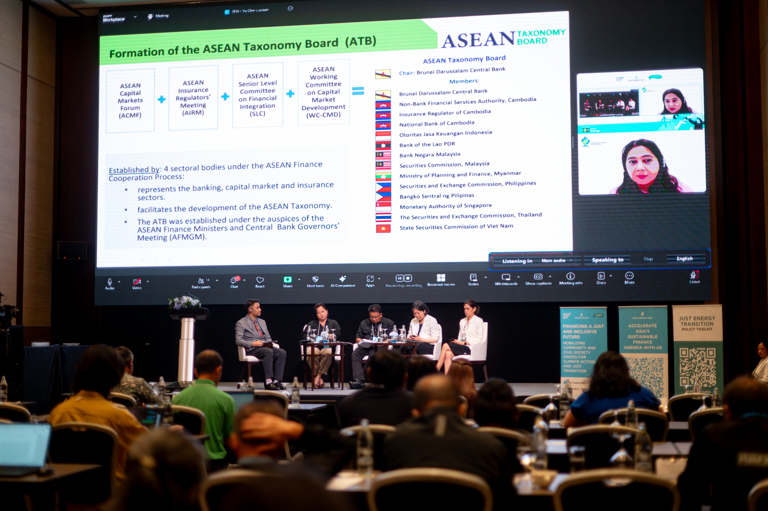
However, the effectiveness of this regional framework is being undermined by specific gaps identified in the national context. Hydropower Finance serves as a prime example of this disconnect, where the ability for companies to issue green bonds—which meet technical low-carbon criteria but carry massive social and environmental risks—demonstrates how easily climate mitigation targets can be detached from justice outcomes.
As Sarinee Achavanuntakul, Head of Research, Fair Finance Thailand, explained: "It is still possible for any project to be designated ‘green’ under the Thailand taxonomy even if it fails the Do No Significant Harm (DNSH) and Minimum Social Safeguards (MSS) criteria, provided the issuer merely commits to a so-called mitigation plan. This is a very big loophole for greenwashing because that plan neither refers to any international standard nor includes a mechanism to ensure follow-through.”
This scenario underscores the risk of greenwashing in clean energy infrastructure, where the financial sector’s focus on "green" assets often overlooks the fundamental social safeguards necessary for a true Just Energy Transition (JET).

Taxonomies as a Lever: A Demand for Mandatory Justice
The panelists agreed that the emerging ASEAN and Thailand Taxonomies present a critical, though currently underutilized, opportunity. As the ASEAN taxonomy provides a common, but voluntary, language for sustainable finance across the region, its effectiveness hinges on national-level enforcement.
To close the accountability gap, the session articulated four non-negotiable conditions for a justice-aligned transition. Shubert Ciencia, Energy Justice and ASEAN Engagement Program Manager, Oxfam International-Asia, drew from Oxfam’s Influencing Just Energy Transition (I-JET) Policy Toolkit to outline the four fundamental, non-negotiable justice conditions:
- Recognition-Based Justice: Operates on the principle that no one should be left behind, requiring the inclusion of all stakeholders (producers, regulators, consumers, and host communities) to ensure their aspirations are sufficiently addressed.
- Procedural Justice: Demands substantial participation from affected individuals and communities, ensuring they genuinely have a seat at the table in the design and development of energy projects.
- Distributional Justice: Aims to dismantle inequalities perpetuated by the dominant powers, such as challenging male dominance in the energy sector and addressing unpaid care work by women.
- Access to Remedy: Ensures that any impacted community has avenues for justice, aligning with the UNGPs.
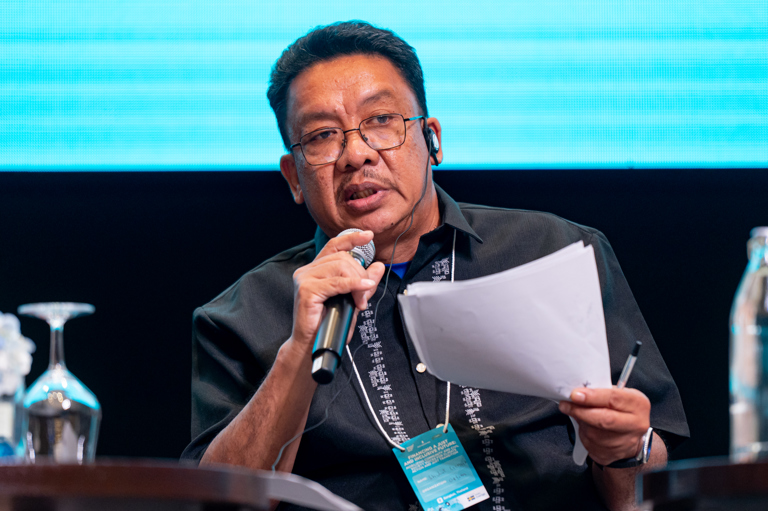
“These four fundamental justice principles are non-negotiable and must be integrated into the transition from fossil fuels to renewable energy solutions,” emphasized Shubert.
Community representatives have spotlighted the current lack of transparency and the difficulty in accessing grievance mechanisms from both financial institutions and project developers, demanding enforceable covenants to address cumulative, cross-border impacts.
The Way Forward: From Voluntary Guidance to Mandatory Rules
The overriding consensus was that the financial sector cannot be relied upon to self-regulate its way to a just transition. The way forward requires:
- Mandatory Requirements: Regulators must establish mandatory requirements for monitoring, disclosure, and credible transition plans for financial institutions.
- Independent Verification: Taxonomies must be coupled with mandatory disclosures and independent verification to shift capital from high-risk projects to genuinely community-benefiting renewables.
- Regional Arbitration: The establishment of a regional arbitration mechanism is urgently needed to address transboundary investment issues and ensure affected parties have recourse to justice.

Bernadette Victorio, Program Lead, Fair Finance Asia, provided crucial context on the role of civil society: “Allowing CSOs to effectively articulate impacts and cross-border collaboration is vital. When civic space is restricted nationally, discussions must be elevated to the regional or international level, especially for cross-border financial issues like hydropower projects. This also highlights the crucial need for regional platforms like ASEAN and the Asian Development Bank (ADB) to actively explore providing pathways for solutions to address the impacts of cross-border finance in emerging markets.”